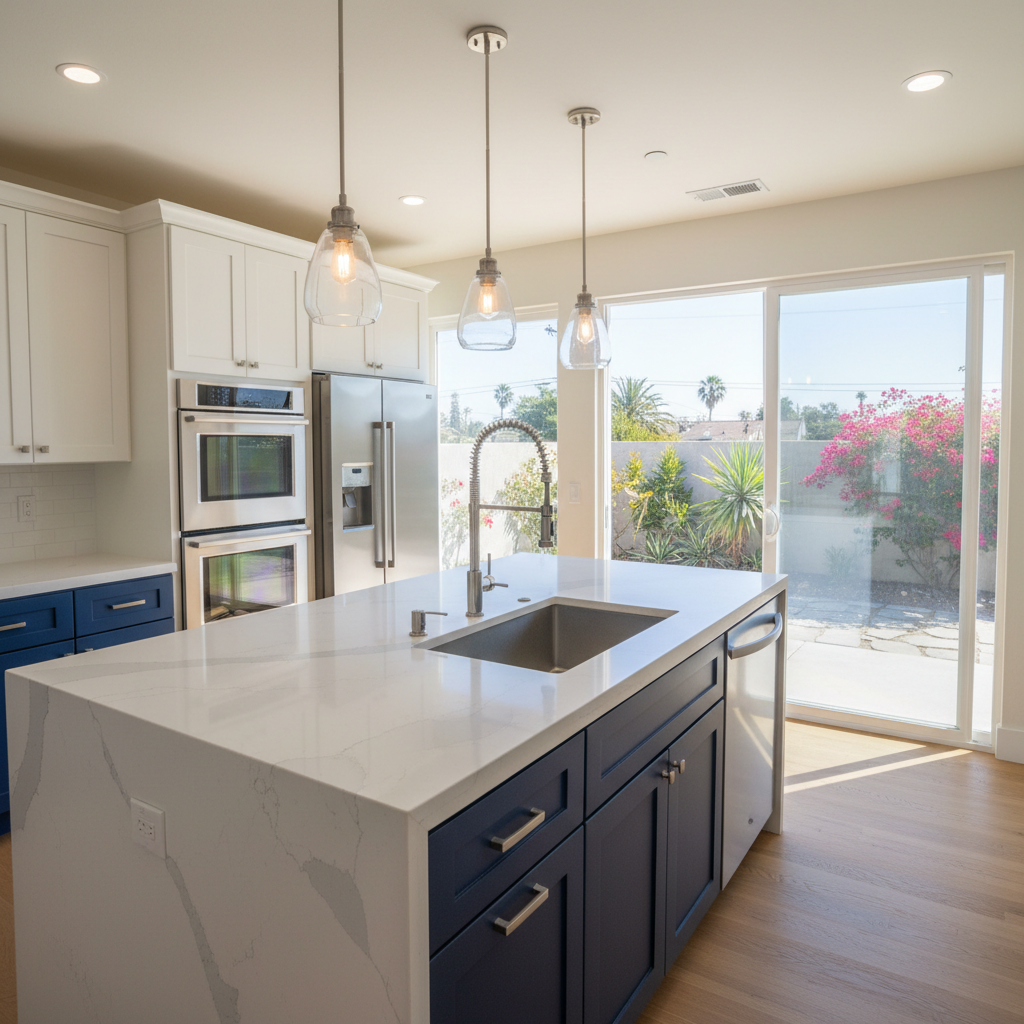
You want a kitchen island. Who doesn't? It's the heart of the modern kitchen, a place for cooking, eating, homework, and just hanging out. But I've seen a lot of folks in Long Beach get really excited about a kitchen island and then make some pretty big mistakes, both in planning and in who they hire. Let's talk about what to watch out for so you don't end up with regrets.
Mistake #1: Not Planning for Flow and Function
This is probably the biggest one. People see a beautiful island in a magazine or online and think, "I want that!" without really considering how it'll work in their specific kitchen. You need to think about your kitchen's 'work triangle' – the path between your fridge, sink, and stove. An island can absolutely disrupt that if it's not placed right.
You've got to have enough clearance around the island. I recommend at least 36 inches on all sides, but 42 inches is even better, especially if you have appliances like a dishwasher or oven door opening into that space. Imagine trying to load the dishwasher while someone is sitting at the island. If it's too tight, you're going to be bumping elbows and feeling cramped every single day. This isn't just about aesthetics; it's about how you live in your home. A lot of older homes in Long Beach, especially those charming Craftsman bungalows or mid-century ranches, have smaller, more defined kitchen spaces. You can't just plop a massive island in there and expect it to work.
Mistake #2: Underestimating Electrical and Plumbing Needs
So, you want an island with a prep sink, a dishwasher, or even just some outlets for your stand mixer? Great! But that means you're going to need plumbing and electrical lines run to the island. This isn't a simple task, especially if your kitchen is on a slab foundation, which is common around here. Tearing up concrete to run new lines adds significant cost and complexity to the project.
I've seen homeowners get a quote for an island, then get hit with a huge change order when the contractor realizes the extent of the utility work needed. Always, always, always discuss your island's intended features with your contractor upfront. Make sure they're including all necessary electrical and plumbing rough-ins in their estimate. If they gloss over it, that's a red flag. You don't want to find out halfway through that your dream island sink is going to cost an extra five grand because of unexpected slab work.
Mistake #3: Ignoring Storage and Seating Practicalities
An island can be a storage powerhouse or a seating solution, but often people try to cram too much into one. If you want seating, you need enough overhang for comfortable leg room – usually about 12-15 inches for counter-height seating. Don't skimp on this, or your family will be kicking the island base all day long.
And storage? Think about what you'll actually put in there. Deep drawers are fantastic for pots and pans. Shelves are good for cookbooks or decorative items. Don't just add cabinets for the sake of it; make sure they're functional for your kitchen needs. A well-designed island can seriously boost your kitchen's organization, but a poorly planned one just becomes a clutter magnet.
Mistake #4: Hiring the Wrong Contractor (or No Contractor at All)
This is where things can really go sideways. Look, I get it. Everyone wants to save a buck. But a kitchen island isn't a DIY weekend project for most people, especially if it involves utilities. And hiring the cheapest guy you can find on Craigslist? That's a gamble you usually lose.
Here's what to look for:
- Experience with Islands: Ask to see examples of kitchen islands they've installed. This isn't just about cabinet installation; it's about understanding structural support, utility routing, and countertop templating.
- Proper Licensing and Insurance: This is non-negotiable. Always verify their CSLB license. If they're not insured, any accident on your property could become your problem.
- Clear Communication: Do they listen to your ideas? Do they explain things in a way you understand? A good contractor will walk you through the process, explain potential challenges, and offer solutions. They won't just nod and say yes to everything.
- Detailed Quotes: A quote should break down costs for materials, labor, demolition, electrical, plumbing, and any other specific tasks. If it's just a single number on a napkin, walk away.
At Oasis Kitchen Remodeler, we spend a lot of time on the planning phase because we know it prevents headaches down the road. We've seen the difference it makes. Don't rush into it. Take your time, do your homework, and choose a professional who understands the intricacies of a proper kitchen island installation. You'll be glad you did when you're enjoying your beautiful, functional new space for years to come.